


Hyperthyroidism in Cats
Feline hyperthyroidism occurs when the thyroid gland produces too much thyroid hormone. It is more common in middle-aged and older cats. Thyroid hormones affect metabolism, heart rate and other body functions.
I-131 treatment flow chart

The owner must sign and retain the provided instruction sheet for post I-131 treatment home care at discharge. Restrictions include minimising contact with the animal, especially during the first two weeks; wearing latex gloves when handling the cat and waste for six weeks; and following special waste storage procedures during the first two weeks. Follow the latest instructions provided by the medical team.
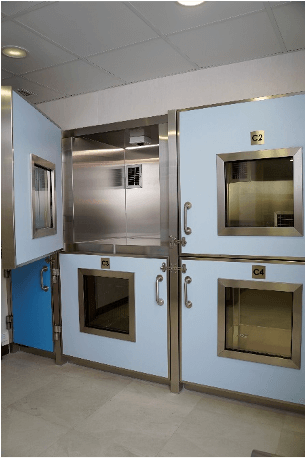
Treatment facilities and common questions
What is Hyperthyroidism in cats
Hyperthyroidism is caused by an increase in the production of thyroid hormones (known as T3 and T4) from an enlarged thyroid gland in a cat’s neck.
Symptoms
The thyroid hormones have an important role in regulating many of your cat’s body processes including metabolism, blood pressure, heart rate, body temperature and even gastrointestinal function.
Here is a list of possible symptoms that you may notice:
Weight loss (despite good appetite).
Increased appetite and food intake.
Increased drinking.
Increased urination.
Vomiting and/or diarrhoea.
Coat changes – their coat may appear unkempt, matted or greasy.
Treatment of Hyperthyroidism
Radioactive Iodine (I-131) Treatment is now very well established as a treatment for hyperthyroidism in humans as well as animals, so you needn’t worry that it’s experimental or unproven. This is a very specialised treatment, however; we have to be licensed to handle radioactive materials.
How Does I-131 Treatment Work?
I-131 is given as an injection under the skin at the back of the neck or it can be taken as a capsule by administration. It is absorbed into the bloodstream and then gets taken up by thyroid tissue. It becomes concentrated in the thyroid, and the beta-radiation it emits kills the thyroid cells. This reduces the size of the gland and its ability to produce thyroid hormone. Cats treated with I-131 need to be hospitalized for 14 days following the injection or administration. This is when they are the most radioactive. Their level of radioactivity will be checked daily with a Geiger counter and only when it reaches acceptable low levels can they go home.
Home care after I-131 treatment
The owner must sign and retain the provided instruction sheet for post I-131 treatment home care at the time of discharge. Restrictions include minimizing contact with the animal, especially during the first two weeks, handling the cat and waste products with latex gloves for six weeks, and following special waste storage procedures for the first two weeks.