Breathing or circulatory instability
Critically ill patients needing oxygen, assisted ventilation or close monitoring of vital signs.


Close monitoring and tailored support for critically ill cats and dogs.
The Critical Care Centre at Harvest Veterinary Emergency & Critical Care Centre operates 24 hours a day, 365 days a year. Registered veterinarians and our nursing team care for patients needing close observation, frequent treatment or life support, with specialist input according to each patient's condition.
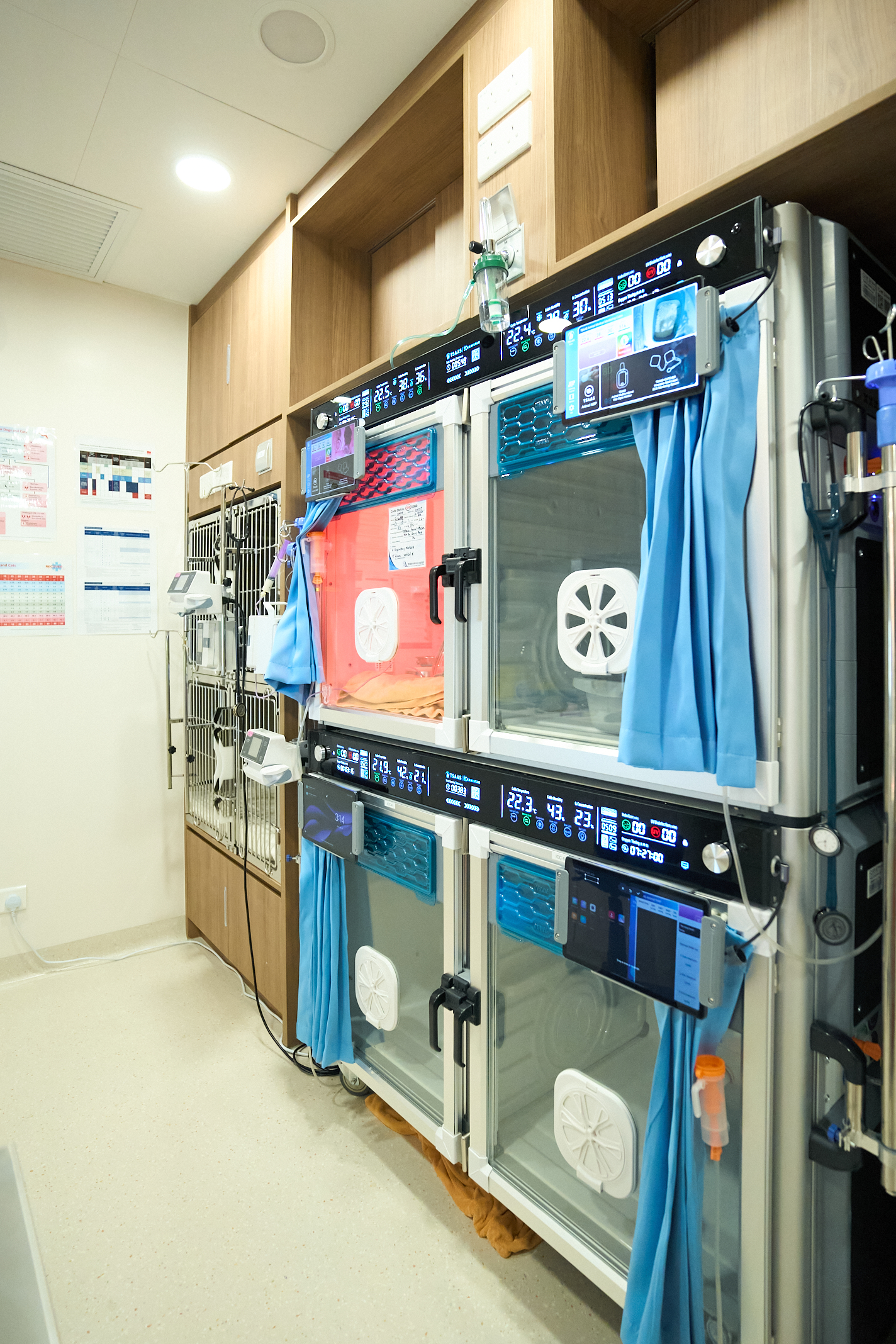
Critical Care Centre care is intended for unstable patients or those needing enhanced monitoring and frequent medical intervention. Admission and the level of care depend on veterinary assessment; not every hospitalised animal needs intensive care.
Critically ill patients needing oxygen, assisted ventilation or close monitoring of vital signs.
Animals whose condition may change rapidly and who need frequent reassessment, investigations and treatment adjustments.
Patients needing enhanced monitoring and support after major surgery or when complications arise.
Equipment supports clinical care. The team combines examination findings, test results and monitoring data to select appropriate support and adjust the treatment plan.
Multiparameter equipment helps assess heart rate, blood pressure, oxygen saturation, breathing and temperature. ECG and carbon dioxide monitoring may be used when clinically indicated.
Explore intensive care facilities →The hospital has oxygen cages, oxygen delivery equipment and mechanical ventilators. Conventional oxygen, high-flow oxygen or mechanical ventilation is selected according to respiratory function and veterinary assessment.
Learn about ventilator support →Infusion pumps help control the delivery of fluids and medicines. Warming, temperature management and nursing support are tailored to the patient's needs.
Blood gas analysis, X-rays and ultrasound can support assessment. Patients needing isolation receive care according to their infection-control requirements.
Learn about isolation facilities →Critical illness can affect several body systems. Our emergency and critical care team collaborates with internal medicine, cardiology, surgery, anaesthesia and pain management, and oncology teams as needed to assess treatment options and ongoing care.

Provide information about existing illnesses, medicines, known allergies, recent tests and usual diet. Leave an up-to-date telephone number and nominate a main contact.
Tell the team if these details change, to support assessment and communication.
Ask the team about the current condition, treatment goals, proposed tests, estimated costs and when admission or discharge plans will be reassessed.
Please confirm update arrangements, visits and personal belongings directly with the care team. Visits must take account of the patient's condition, treatment and infection-control needs.
For an urgent referral, call 3102 8528 with details of the patient's condition, current treatment and support needs. Both veterinary teams should coordinate acceptance.
Provide a medical summary, recent laboratory and imaging results, medication names and last administration times, and important changes in condition.
The referring veterinarian and receiving team should discuss timing and support during the journey. Do not independently stop treatment or oxygen to transfer an unstable patient.
The Critical Care Centre provides enhanced care for patients needing closer observation, frequent treatment or life support. The veterinarian selects the level of care and reassesses it as the patient's condition changes.
Yes. The Critical Care Centre operates 24 hours a day, with registered veterinarians and nursing staff providing care, monitoring and treatment according to each patient's needs.
No. Mechanical ventilation is one form of support. Its use depends on the veterinarian's assessment of breathing function and the patient's overall condition.
Please confirm visits with the care team in advance. Patient stability, treatment procedures and infection-control requirements may affect when and how visits can take place.
The length and cost of a stay depend on the illness, investigations, treatment, support and progress. Discuss estimates and reassessment plans with the team. Intensive care cannot guarantee a particular recovery time or outcome.
Call to discuss the patient's current condition.